Frameworks
The tools you’ll keep using on Monday.
These are durable, tool-agnostic frameworks: they work regardless of which AI model you’re using or which one comes out next quarter.
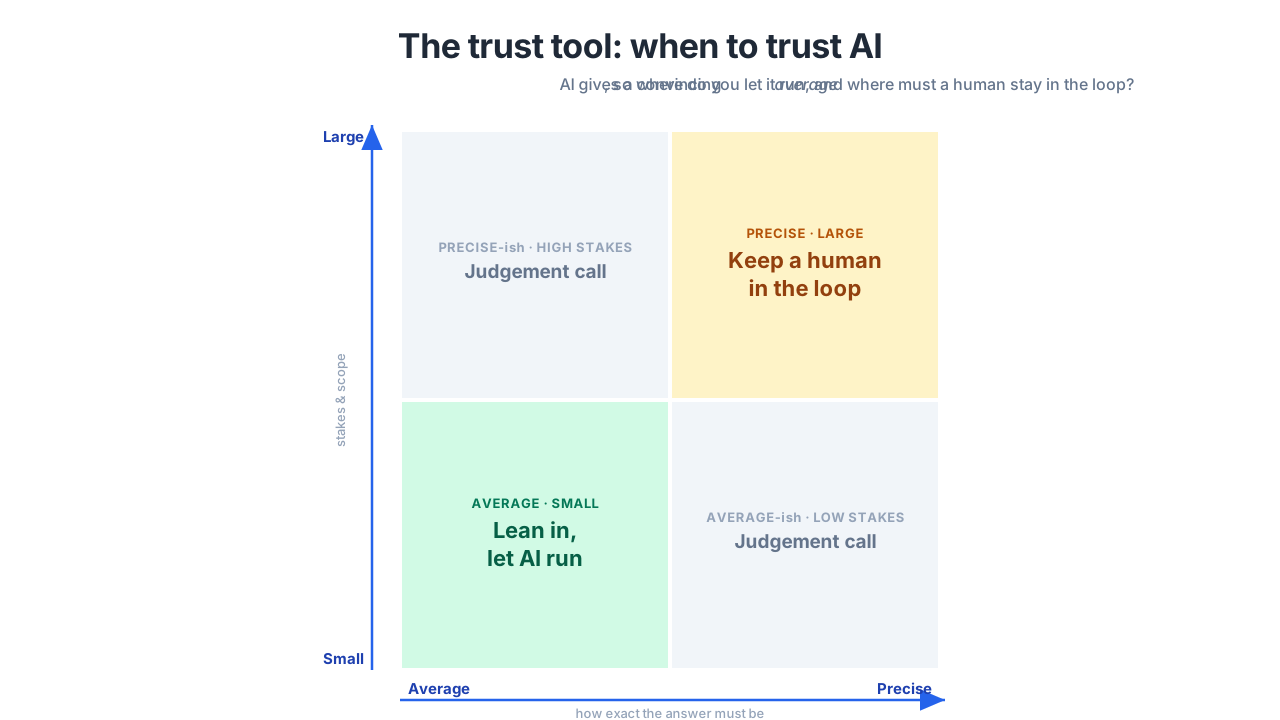
The trust tool: when to trust AI
The core lens for the whole day: Average / Precise × Small / Large.
- AI excels at average answers over small, low-stakes work, so lean in.
- It gets dangerous on precise answers and large, high-stakes work, so keep a human in the loop.
This is what makes “where does a human stay in the loop?” an answerable question rather than a vibe. It comes from the free companion book, Conversation, Not Delegation. Start there to go deeper.
DDCD: leading through the inevitable crisis
When an AI project hits trouble (and it will), work the problem: Diagnose → Decide → Communicate → Document. First ask whether it’s a technical, people, leadership, or ethical crisis, as they need different responses.
Scale / Pivot / Kill: the go/no-go call
At each gate, the honest question isn’t “is it perfect?”. It’s whether the evidence justifies continuing. Killing a project that isn’t working, early, is success, not failure. The cost of wrongly scaling is far higher than the cost of wrongly killing.